Wounds & Death
Wounds are persistent injuries that come about as the result of Combat Activity, accidents, and effects. Many encounters incorporate simple damage-causing injuries, offset by Character Features, a mystic effect, or some item/technology. One cannot have a Wound and be Hale. Normal Health restoration through healing and rest does not remediate the secondary effects of a Wound unless noted. All Wounds impose a measure of Health Reduction of their maximum Health as well as a non-lethal, cumulative level of Exhaustion on the target; The recipient loses 1 measure of Movement even if they are immune to Exhaustion.
Minor Wounds can be gotten over quickly; Unless noted, their effects are remediated after the Short Rest for each such Wound.
Major Wounds take a long time to heal and recover from; Unless noted, their effects are remediated after a Long Rest for each such Wound.
Grievous Wounds leaves the body seriously weakened after a Major Wound to the extent that all checks to resist effects are made with Disadvantage until remediated. These wounds heal after all others and may have Grievous Wound Additional Impacts.
Some Simple Medical Practices & Advanced Medical Practices can remediate wounds. The source of the wound may describe other specific effects. Surviving persistent injuries is usually just a matter of time and natural healing, though some are so Grievous they will alter the form and function of a character – leaving them with permanent disfigurement, chronic pain, and deep scars.
Obliterative Death: Disintegration, excessive damage and the like can cause obliterative death – death that cannot be recovered from by any means.
Death Stabilization
Based on damage in excess of 0 and the dying’s Essence. Unfettered gains a bonus unless noted.
Without measures to prevent it, a character will lose 1 Health per round while dying.
i20™ Wound Details
Health Reduction immediately reduces the maximum Health value for a character by 3 until the Wound is remediated; In addition to the normal Exhaustion and/or Movement penalty.
- Lesser Restoration: Immediately remediates 1 Minor Wound
- Greater Restoration: Immediately remediates 1 Major Wound, or 2 Minor Wounds
- Heal: Remediates all Wounds after 1 Short Rest
- Regenerate Remediates all Wounds after 1 Hour
 iCore™ Wound Details
i20™ Combat Activity Details
Stabilizing Process: 3 Death Saves, DC = Negative Health – (free Essence + Constitution Adj; +1 for Unfettered characters) –
A 1 always fails; if negative damage > normal Health maximum, death is instant..
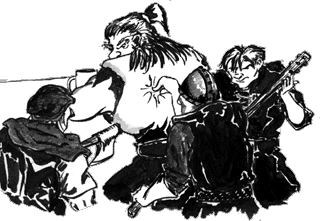
Assess order of activity. Tactical positions, Initiative and intent.
Resolve Combat Activity according to Initiative Order; Resolve Offensive and Defensive checks and outcomes, assessing damage.
Assess outcome; subtract Damage from the Health of the target. All damage, regardless of class (normal, Fatigue, Hard, or Malaise) is subtracted from the same current Health total. Assuming no Wounds result, the target continues within Combat Activity. Damage dropping a target below 1 is tracked as Negative Health.
In addition to tracking adjustments to the Health of the target, it’s Defensive measures ( Armor, Resilience, etc.) are tracked as well – these may have an impact on the measure of success of an attack!
Assess results of damage to the target; Apply any Conditions AFTER ‘Wound’ assessment:
- Was it “Critical” Damage from an Extraordinary Attack Result or Disastrous Resistance Result?
Target takes a Minor Wound - Did the adjusted Damage drop the target below 1 Health?
Target takes a Minor Wound - If Fatigue Damage drops the target below 1 Health, they immediately fall Unconscious and out of Combat Activity
- Was the target already wounded or Damage taken > Health?
The wound is a Major Wound - If Health below 1, the target is Unconscious and proceeds to the ‘Death Process’…
Death Process – Assess
@ End of the Round (after all other actions on the target), evaluate the dying target…
- If the target received Healing to take their Negative Health to a Health total > 0
The target is Conscious and exists the Death Process - If the target does NOT have a Stabilizing Process, it is DEAD
- If the Damage > Damage Threshold (if the target has one) the target is immediately DEAD
- If the Damage < Damage Threshold (if the target has one) AND the target has a Stabilizing Process
The target makes a Death Check, evaluating success or failure against their Stabilizing Process. Wounds may affect Death Checks.
- If the target has a # of successful Death Checks = their Stabilizing Process
The target is Unconscious and exits the Death Process and Combat Activity - If the Death Check fails, and the # of failed checks exceeds their Stabilizing Process, the target is DEAD
- If neither the number of successful or failed Death Checks exceeds the Stabilizing Process, they Hemorrhage
Assess ongoing stabilization process… the target remains Unconscious and/or unresponsive.
- If the target received Healing but not enough to revive them from Negative Health
The target proceeds to the next round - Otherwise, the target takes another 1 Damage and further damage from any Aggravated wounds and proceeds to the next round
iCore™ Combat Activity Details
The default Stabilizing Process is {placeholder} unless noted elsewhere; Damage Threshold is set to {placeholder}